
Utah winters are hard on a parked machine. Months of freezing nights, dry air, and sitting still let fuel go stale, batteries drain, and moisture creep into places it shouldn't. Most of the "it won't start" calls we get in March and April trace back to how a bike, ATV, or UTV was put away in the fall.
The good news: winterizing takes an afternoon, and it's mostly the same list for every machine. Work through the steps below before the first hard freeze. If you'd rather hand it off, we can do the oil change, battery check, and coolant service for you, and store it indoors until spring.
Before You Park It
Do these in order. The last ride of the season is the best time to start, while the engine is warm.
Fuel
Skip the fuel stabilizer. Old fuel goes stale, pulls in moisture, and varnishes carburetors and injectors, and no bottle from the parts store fixes that. Drain the tank and the carburetor float bowls before storage, and start the season on fresh, high-octane, ethanol-free fuel. Not sure how to drain yours? Ask us. Our Fuel Facts guide covers why.
Oil & Filter
Used oil carries acids and moisture from combustion that sit on engine parts all winter. Change the oil and filter before storage, not in the spring, so the engine rests in clean oil. Oil & filter change starts at $65.
Battery
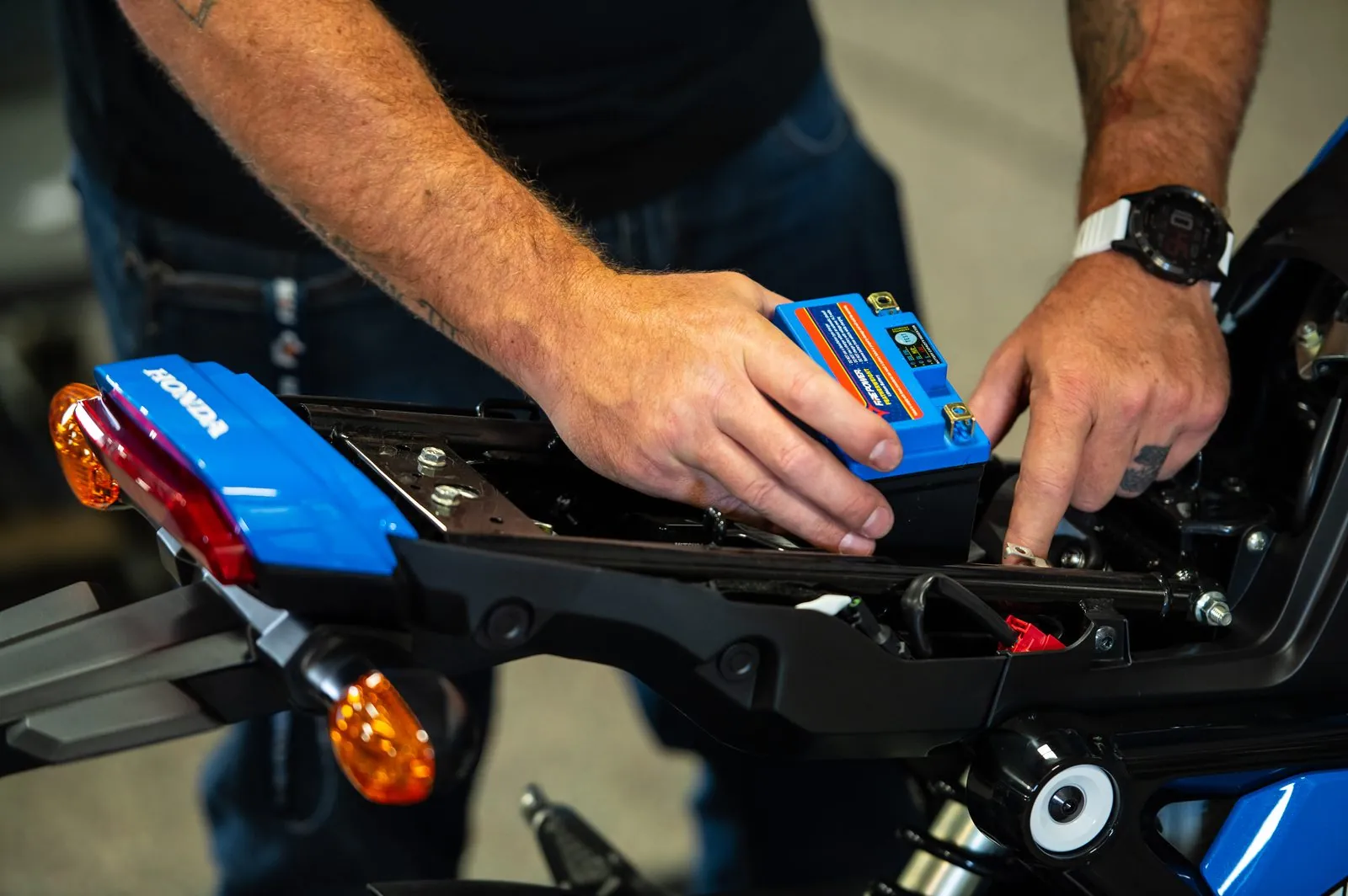
A battery left on the bike through a Utah winter often won't survive to spring. Put it on a battery maintainer (a smart charger made for long-term storage, not a regular charger), or pull it and keep it somewhere above freezing on a maintainer. Not sure it'll make it? Our battery inspection is free.
Coolant
On liquid-cooled machines, coolant that's old or mixed too weak can freeze and crack an engine or radiator. Check the freeze protection with an inexpensive tester, and if the coolant is due, a radiator flush & fill before winter is cheap insurance.
Tires
Tires slowly lose pressure and can develop flat spots from sitting in one position. Set them to the pressure on the sidewall or in your owner's manual, and if you can, put the bike on a stand so the tires are off the ground.
Clean, Lube & Cover
Wash off dirt, mud, and any road salt from late-season rides, then dry everything well. Lube the chain, cables, and pivot points. Plug the exhaust and air intake against mice (and remember to pull the plugs in spring), and use a breathable cover. Plastic tarps trap moisture against the paint and metal.
No garage, or no room in it? We offer indoor motorcycle storage starting at $45 a week. When spring comes around, our Spring Reactivation Checklist covers getting it back on the road.