
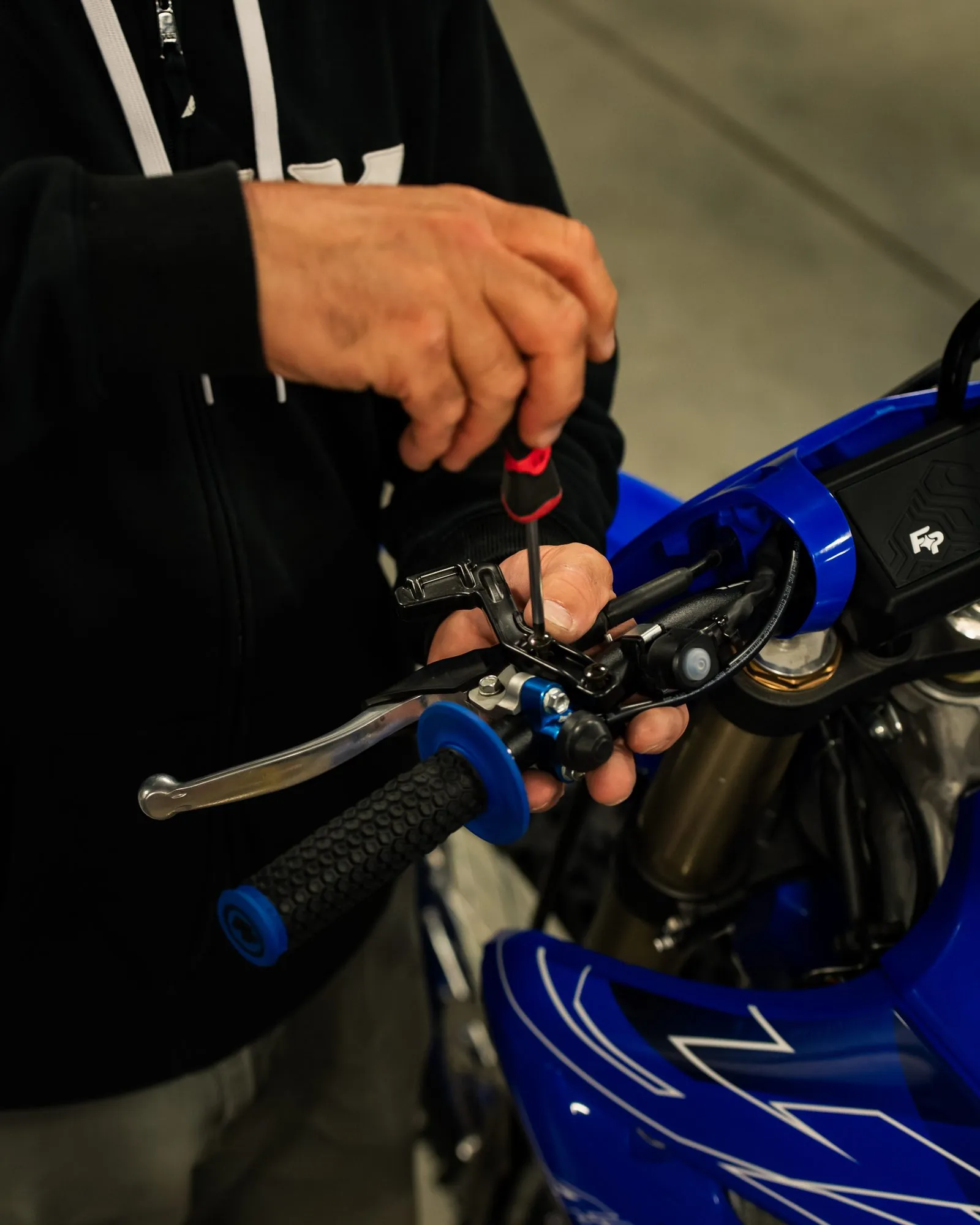
Motorcycle problems don't always show up where you'd expect. A weird idle could be fuel-related, electrical, or a vacuum leak. A brake issue that feels like worn pads might actually be a warped rotor or a seized caliper. That random clicking noise could be something, or nothing at all. That's why we don't diagnose a bike off a scan tool and a guess alone.
What Goes Into a Real Diagnosis
When you bring a bike in for a diagnostic, here's what you're actually getting:
Real-World Experience
Years of hands-on time across every kind of bike, not just what a manual says should be happening.
A Multi-Factor Process
Listening, smelling, and feeling for wear patterns - checking the details a scan tool alone can't, right down to the smell of the exhaust or a look at the fuel itself.
The Right Tools - Not a Replacement for Skill
Modern diagnostic equipment plays a role, but it supports the read, it doesn't replace it.
Code Scans and Data Logging
One piece of the puzzle, not the whole picture. A computer gives you a list of codes - we give you the actual answer.
We've had bikes towed in for "electrical failure" that turned out to be a bad ground, and bikes misfiring because someone filled up with stale gas. Problems are sometimes more complex than they look, and sometimes a lot simpler - the only way to know which is to actually look.
Why It's Worth Having Us Take a Look
The Bike Tells You What's Wrong
The way it cranks, the smell of the exhaust, how the chain tension feels under load, the color of the plugs - it's all information. Tyler can tell the difference between a lazy sensor, a fuel starvation issue, and a timing problem just from how a bike sounds at half throttle.
That kind of experience saves time and money, and it's what keeps bikes on the road instead of stuck on a lift.